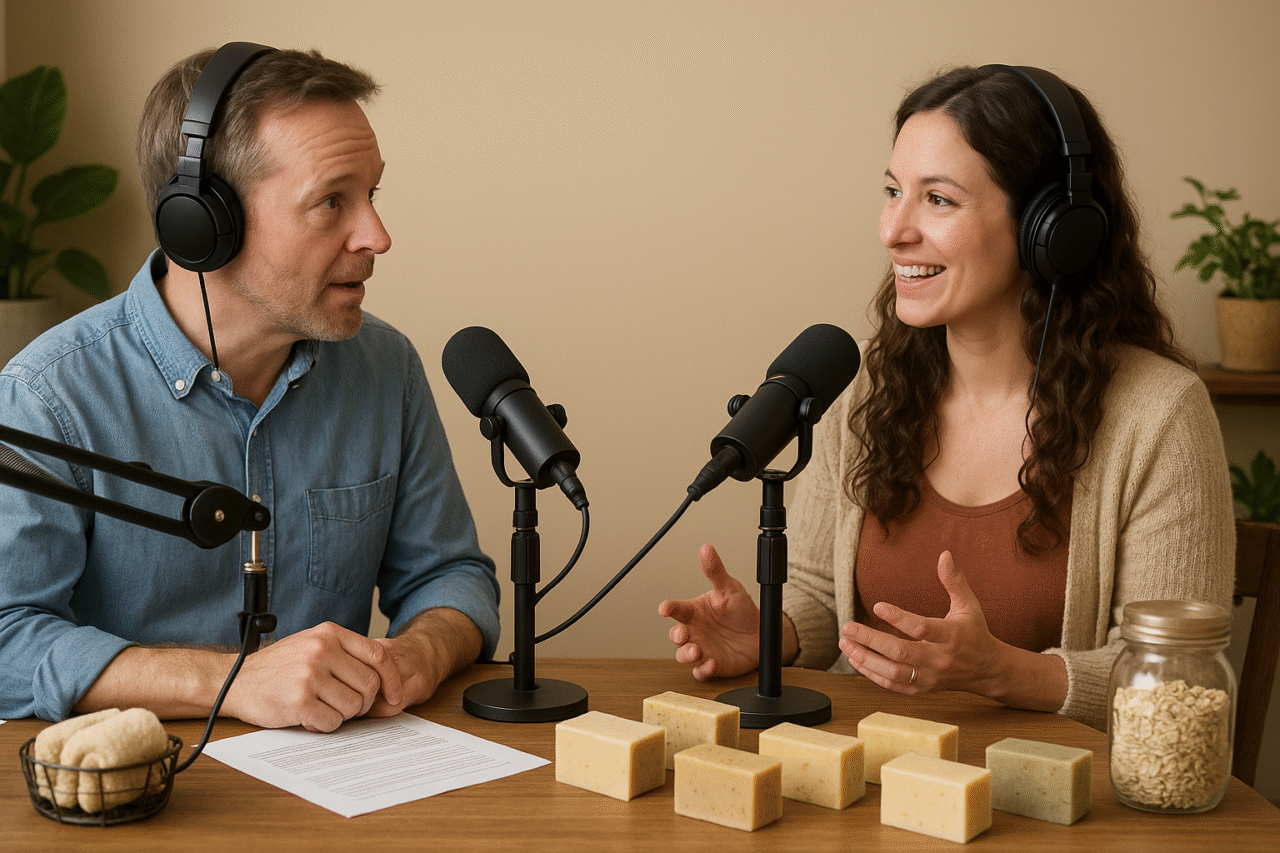
Interview: Back to the Basics – A Conversation with Daniella on Real Soap, Real Health
Host: Mark Ellis (Interviewer)
Guest: Daniella Moore, Founder of WildHaven Soapworks
Mark:
So, Daniella—I’ll admit it right off the bat—I never thought twice about soap. I just grab whatever’s on sale, usually the ones that promise “extra moisturizing” or “deep clean.” It’s soap. It cleans. Right?
Daniella:
That’s what most people think, Mark. But what we call “soap” today isn’t actually soap at all—it’s usually a synthetic detergent bar. If you look closely at the ingredients, you’ll see a long list of chemicals: sodium laureth sulfate, triclosan, parabens, synthetic fragrances, dyes—none of which your skin actually wants.
Mark:
Wait—so you’re saying my usual bar of soap… isn’t soap?
Daniella:
Exactly. True soap is simply the result of combining natural oils or fats with lye and water. That’s it. That’s how I do it, and that’s how other handmade soap makers like The Waterford Girl and Dirty Girl Soap Studio does it. It’s a chemical reaction called saponification. Once that happens, the lye is completely neutralized, and you’re left with glycerin and soap—gentle, nourishing, and safe for the skin.
Mark:
Huh. I always thought the fancier the label, the better it was. “Triple-milled,” “ultra-hydrating,” “micro-clean”—they all sound so advanced.
Daniella:
That’s marketing, not health. Most of those terms are designed to distract you from the ingredient list. The truth is, our skin doesn’t need “advancement.” It needs simplicity. Natural soap retains glycerin, which is a humectant—it draws moisture into the skin. Industrial soaps strip that out to sell it separately in lotions. It’s a bit of a trick.
Mark:
So the soap dries you out on purpose—so they can sell you moisturizer to fix it?
Daniella:
Pretty much. That’s the cycle. When I started making my own soap, I wanted to break that pattern. I use oils like olive, coconut, and shea butter—ingredients people recognize. They clean, they lather beautifully, and they don’t leave you feeling tight or itchy.
Mark:
And you don’t use any preservatives or dyes or perfumes?
Daniella:
None that come from a lab. I use essential oils—lavender, peppermint, tea tree—for scent and natural colorants like clay or herbs. They don’t just smell good; they have real benefits. For example, bentonite clay helps draw out impurities, and oatmeal soothes sensitive skin.
Mark:
It’s funny… the way you describe it, it almost sounds like food.
Daniella:
That’s exactly how I think of it. Your skin is your largest organ—it absorbs what you put on it. So if you wouldn’t eat it, why cover your body in it every day?
Mark:
That’s… honestly kind of eye-opening. I never made that connection. So what made you start making soap in the first place?
Daniella:
It started when my daughter had eczema as a baby. The pediatrician prescribed creams and medicated washes, but nothing really helped. I began reading ingredient labels and realized most “gentle” soaps were full of irritants. So I made my first batch of olive oil soap in my kitchen. Within weeks, her skin cleared up. That was my lightbulb moment.
Mark:
That’s amazing. So it wasn’t about starting a business at first—it was about helping your family.
Daniella:
Exactly. I just wanted something safe and simple. Once friends and family started asking for bars, it grew naturally from there. People are hungry for authenticity—products made with intention, not additives.
Mark:
So if someone wanted to switch, what’s the first step?
Daniella:
Start by reading the label. If you can’t pronounce it, question it. Then look for real soap—usually labeled as “cold process” or “handcrafted.” The fewer ingredients, the better. And give your skin a couple of weeks to adjust; once it does, you’ll notice the difference in softness and balance.
Mark:
You’ve officially made me rethink my bathroom shelf. I’ve been showering in a chemical cocktail all these years!
Daniella:
(Laughs) Don’t feel bad—most people do. But once you go back to basics, you’ll wonder why we ever complicated something so simple. Soap doesn’t need to be fancy to be effective. It just needs to be real.
Mark:
Beautifully said. I think that’s a good place to end it—back to the basics. Daniella, thanks for joining me today and for opening my eyes to what’s really in that little bar we all take for granted.
Daniella:
Thank you, Mark. I always love these conversations. The more people know, the better choices they can make for themselves and their families.